


Recent posts

Feb 05, 2026

Feb 05, 2026
Virginia Introduces HB 308: Proposed...

Feb 05, 2026
Dalton, Georgia Considers Stricter Rules...
- Jan 16, 2026
- By WTVAPGO
- 0 comments
R.J. Reynolds Seeks Section 337 Investigation, Naming Elf Bar/Geek Bar for Alleged “Regulatory Evasion” in U.S. Market
R.J. Reynolds Tobacco Co. has filed a complaint with the U.S. International Trade Commission (ITC), requesting that the agency open a formal investigation into Heaven Gifts International (the parent company of Elf Bar and Geek Bar) and nine U.S. distributors. Reynolds alleges that the parties engaged in unfair competition by selling flavored e-cigarettes in jurisdictions where such products are banned, failing to list products in state directory systems at the time of sale, and using various methods to evade state and local excise taxes—actions that Reynolds claims have harmed its Vuse products. Reynolds is seeking a general exclusion order (or at minimum a limited exclusion order), along with cease-and-desist relief and a bond during the review period.
Key Takeaways
- Complainants: R.J. Reynolds Tobacco Co. (RJ Reynolds Tobacco Co.) and its subsidiaries
- Respondents named: Heaven Gifts International (parent company of Elf Bar and Geek Bar) and its subsidiaries, plus nine U.S. distributors
- Main allegations: Selling flavored e-cigarettes in areas where they are prohibited; selling products not listed in state directories at the time of sale; evading state and local excise taxes
- Legal framing: Reynolds argues these actions collectively amount to noncompliance with the Prevent All Cigarette Trafficking (PACT) Act and constitute unfair competition under Section 337 of the Tariff Act of 1930
- ITC status: The ITC confirmed receipt of a 247-page complaint and initiated a public comment process
- Relief requested: A general exclusion order or at least a limited exclusion order, cease-and-desist orders, and an import bond during the 60-day Presidential review period
2Firsts, January 16, 2026
According to a report by Law360, R.J. Reynolds Tobacco Co. (a subsidiary of British American Tobacco) is urging the U.S. International Trade Commission (ITC) to open an investigation into alleged efforts by certain China-linked competitors to circumvent restrictions on e-cigarettes. Reynolds claims these actions have enabled the parties to “illegally expand market share” and have caused “significant harm” to the domestic performance of Reynolds’ Vuse products in the United States.
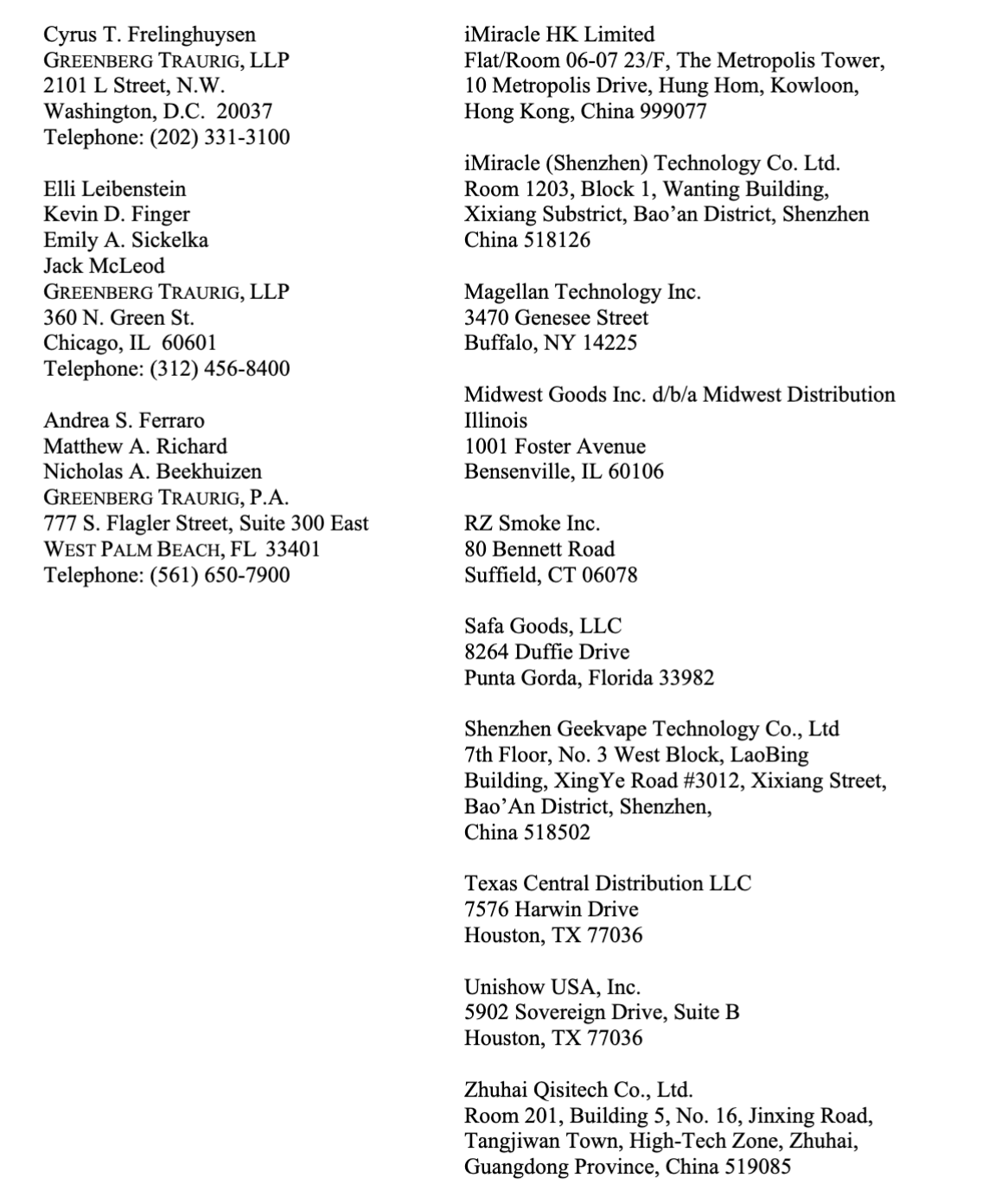
The report says that in a complaint submitted by R.J. Reynolds and its subsidiaries, Reynolds alleges that Heaven Gifts International—whose brands include Elf Bar and Geek Bar—together with its subsidiaries and nine U.S. distributors, engaged in unfair competitive practices by evading multiple regulatory constraints.
On January 14, the ITC confirmed receipt of the 247-page complaint and launched a process to solicit public input on the issues raised.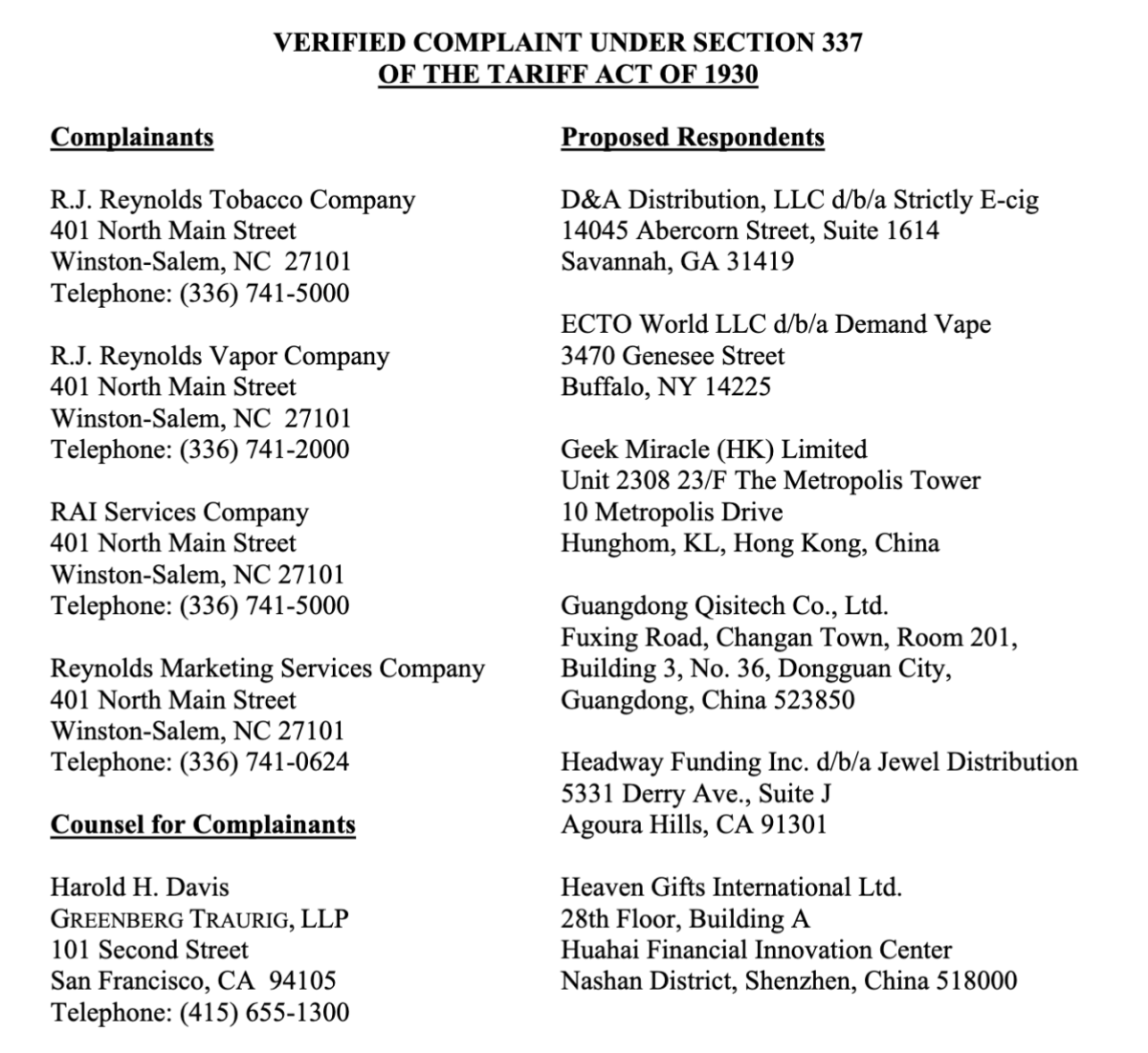
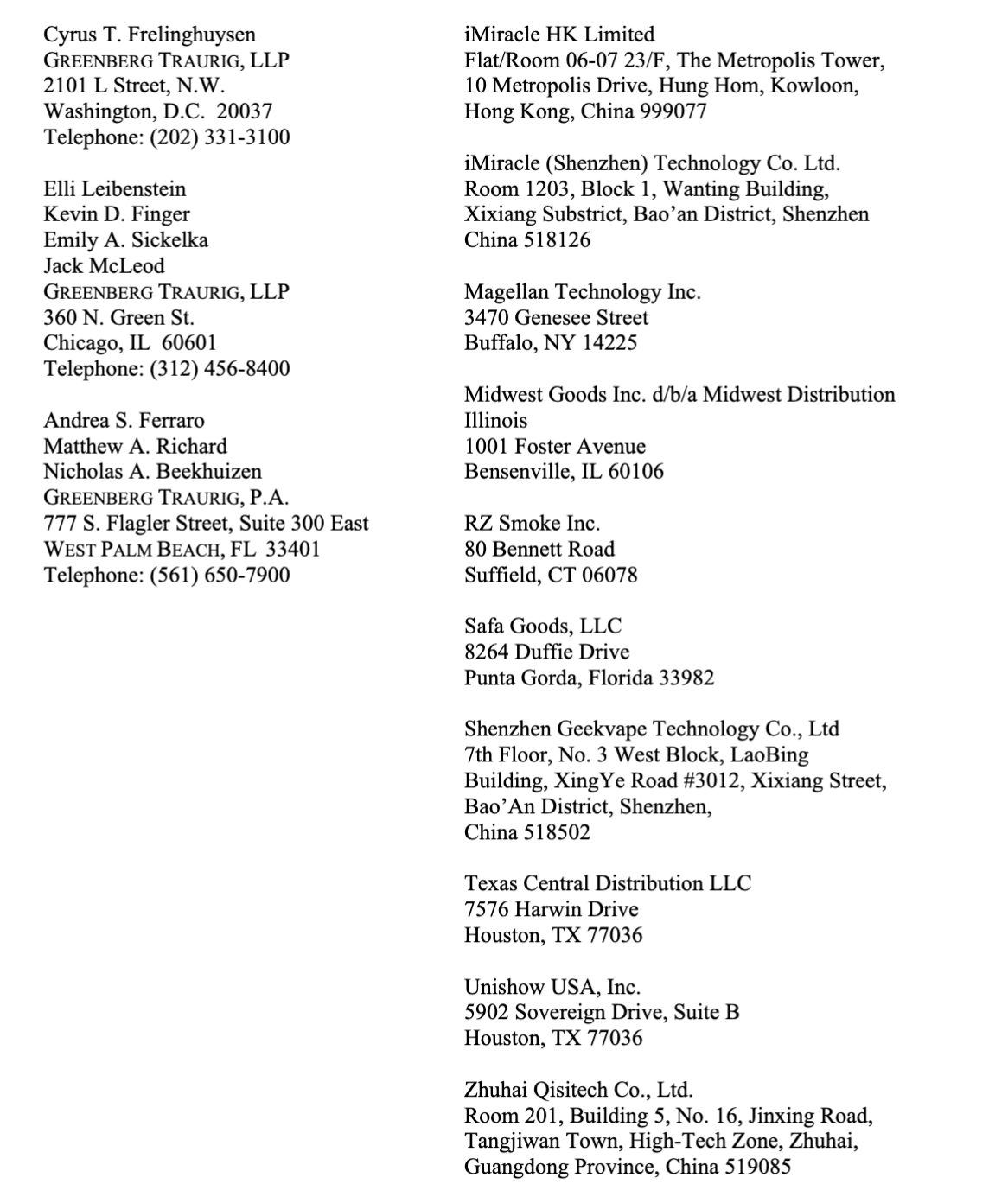
R.J. Reynolds Seeks Section 337 Investigation: Plaintiff and Respondent List
According to Law360, Reynolds alleges that the unlawful activities include selling flavored e-cigarettes in areas where the sale of flavored products has been banned, and selling products that were not listed in the relevant state directory at the time of sale—thereby violating state directory laws.
Reynolds also claims that the products were sold in ways that evade state and local excise taxes—either through direct tax evasion, or by supplying downstream customers who had not paid the applicable taxes. Reynolds argues this “artificially suppresses” retail prices, allowing these products to compete at prices below those of Reynolds’ products.
Reynolds further contends that these violations collectively reflect noncompliance with the Prevent All Cigarette Trafficking (PACT) Act, enabling the accused parties to enter markets “from which compliant sellers are excluded.”
In the complaint, Reynolds describes the result as a “large-scale, multi-billion-dollar black-market network,” alleging that the companies it seeks to name as respondents have profited in the electronic nicotine delivery systems (ENDS, i.e., “e-cigarette”) market through “regulatory-evasion actions,” at the expense of the complainants’ interests.
Reynolds states that as of this month, the U.S. Food and Drug Administration (FDA) has authorized only 39 e-cigarette products and devices for marketing and sale in the United States; 16 of those are attributed to R.J. Reynolds, while Heaven Gifts and its subsidiaries have none.
Based on these claims, Reynolds asks the ITC to issue a general exclusion order to bar the importation into the United States of the products Reynolds attributes to the Heaven Gifts ecosystem, including Elf Bar and Geek Bar products. Reynolds argues that such relief is necessary both to prevent circumvention of any limited exclusion order and because there is a widespread pattern of Section 337 violations, while also asserting that identifying the precise source of these products can be difficult.
If the ITC declines to issue a general exclusion order, R.J. Reynolds requests at least a limited exclusion order against specific companies. Reynolds also seeks cease-and-desist orders to prohibit the named parties and their affiliates from importing, selling, or marketing the relevant products, and requests an import bond for covered e-cigarette imports during the 60-day review period.
Separately, in another ITC matter currently under review, Reynolds has also accused Heaven Gifts and its subsidiaries of infringing an e-cigarette patent held by Reynolds.
Reynolds adds that some of the entities it proposes to name as respondents have faced—or are still facing—lawsuits in U.S. courts. For example, two distributors were reportedly sued by New York City for alleged illegal sales of flavored e-cigarettes; and Elf Bar is said to have “completely exited” California in connection with a lawsuit alleging unfair competition.